Piping &
Instrumentation
Diagram
Security &
Confidentiality
We place a high value on confidentiality and security. As a result, we provide each of our clients with their own private upload and download URLs and passwords on our local server. If you want to learn more about how we exchange documents, follow the link below:
Do you want to
Request an offer?
Thank you in advance for the interest you show in our company. The easiest way to request an offer is to contact us and discuss the details via e-mails or on the phone. You can contact us by clicking here:
EXAMPLES FROM PREVIOUS projects:
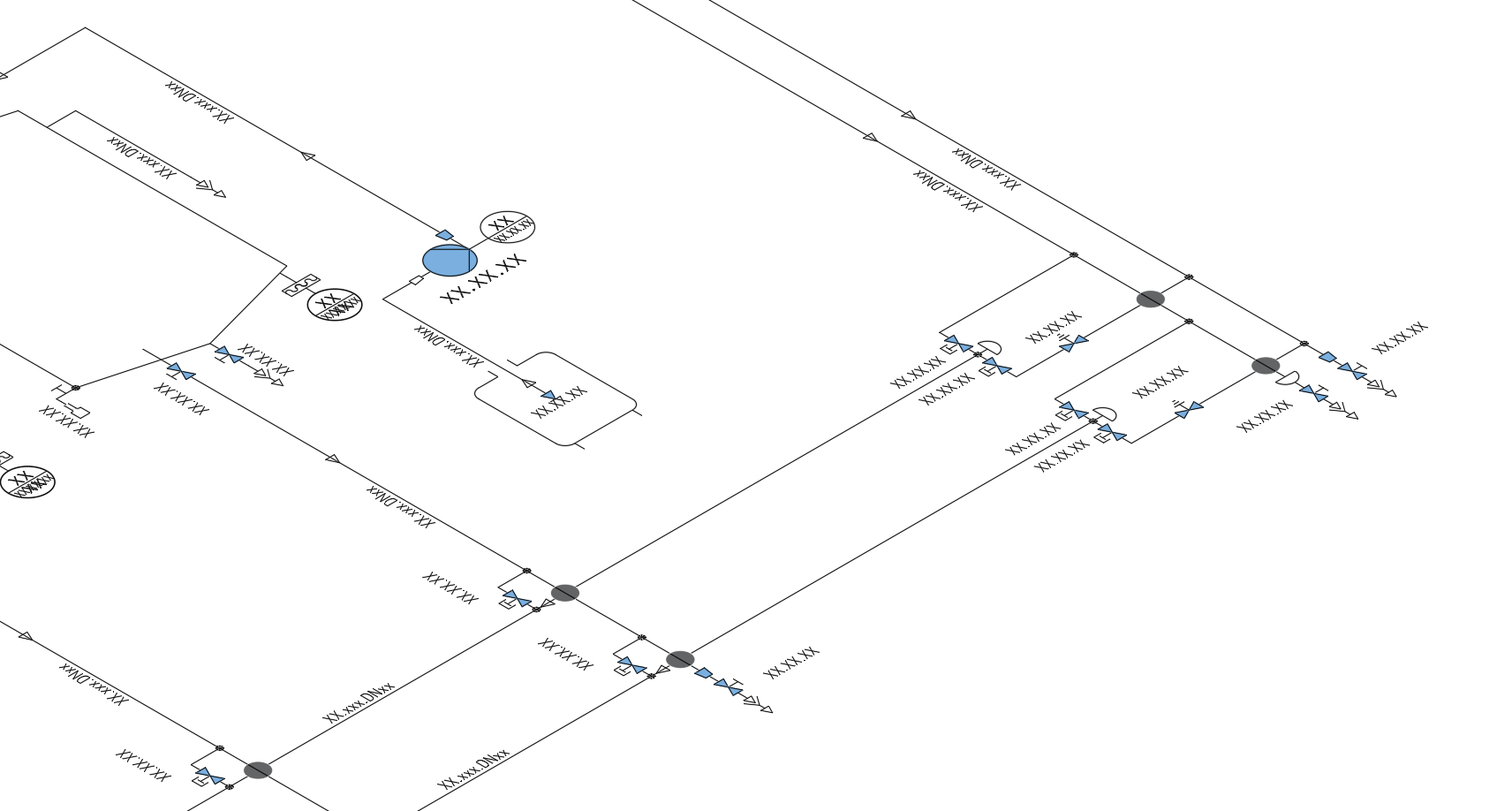
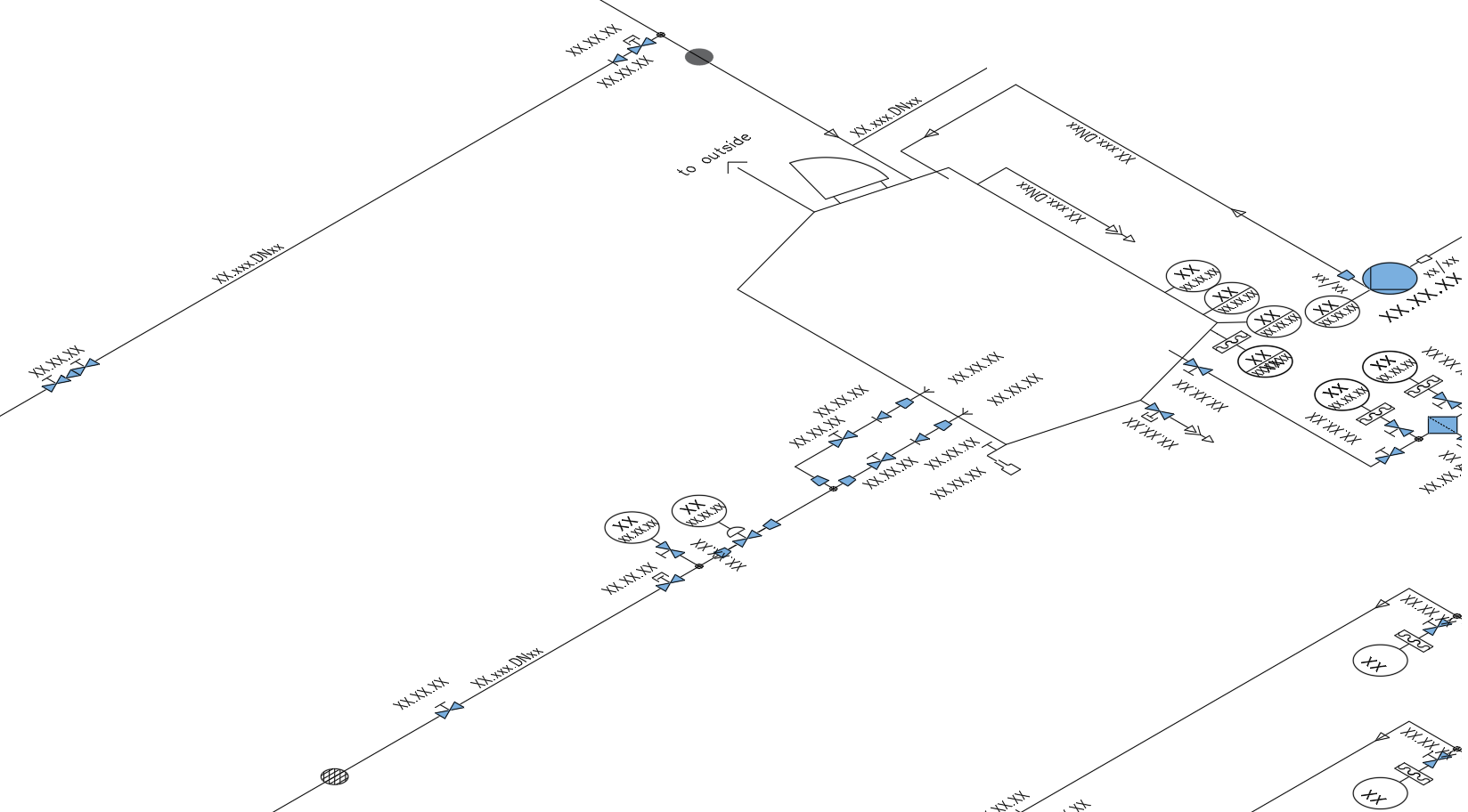


What the P&ID we hand over contains
It is the reference document shared by process, piping, electrical, instrumentation, safety and operations alike.
The equipment and its tags
Tagging to your standard, with the sizing characteristics carried onto the diagram.
The lines, with their full tag
Diameter, piping class, fluid, insulation, heat tracing. The line tag is what links the diagram to the isometric and to the bill of materials: its consistency governs everything downstream.
The valves and in-line components
Manual and automatic valves, check valves, filters, safety devices, with their type and their fail-safe position.
The instrumentation and the loops
Tagging to your standard or to ISA 5.1, control loops, instrumented safety functions and interlocks.
The interfaces
Battery limits, utility connections, connection points towards the other units. This is what is forgotten most often, and found again latest.
The formats
DWG, PDF, or native AutoCAD P&ID.
Where a P&ID starts
Most of the situations we meet begin from an installation already built. The deliverable is the same; the work to get there is not.
Creating one
From a scope of work, or from a process flow diagram already validated.
Taking over an existing one
Extension of a unit in service, revision of a non-standard P&ID, or establishment from a 3D model or a 3D survey.
Establishing the as-built state
Before a project starts, after a field survey, from the final model, or after the works. Those are four different moments, and four different levels of confidence.
Moving to an intelligent P&ID
New, from a survey, or by transforming an existing classic P&ID. The objects then carry their attributes, and the lists are extracted from them instead of being re-entered.
What follows from it
Piping specification — full format, short format for P&ID, then integration into the software —, line list, equipment list, tie-in list. Each exists in a classic or an intelligent version, according to the nature of the diagram.
It is an essential input to the risk assessment and to the preparation of isolations. A safety loop shown as it was ten years ago, a device missing from the diagram, and an intervention procedure is resting on a fiction.
When we revise an existing diagram from a site survey, we deliver the register of discrepancies found together with the corrected diagram. Correcting in silence would remove the most useful information of all: what the operator did not know about their own installation.